
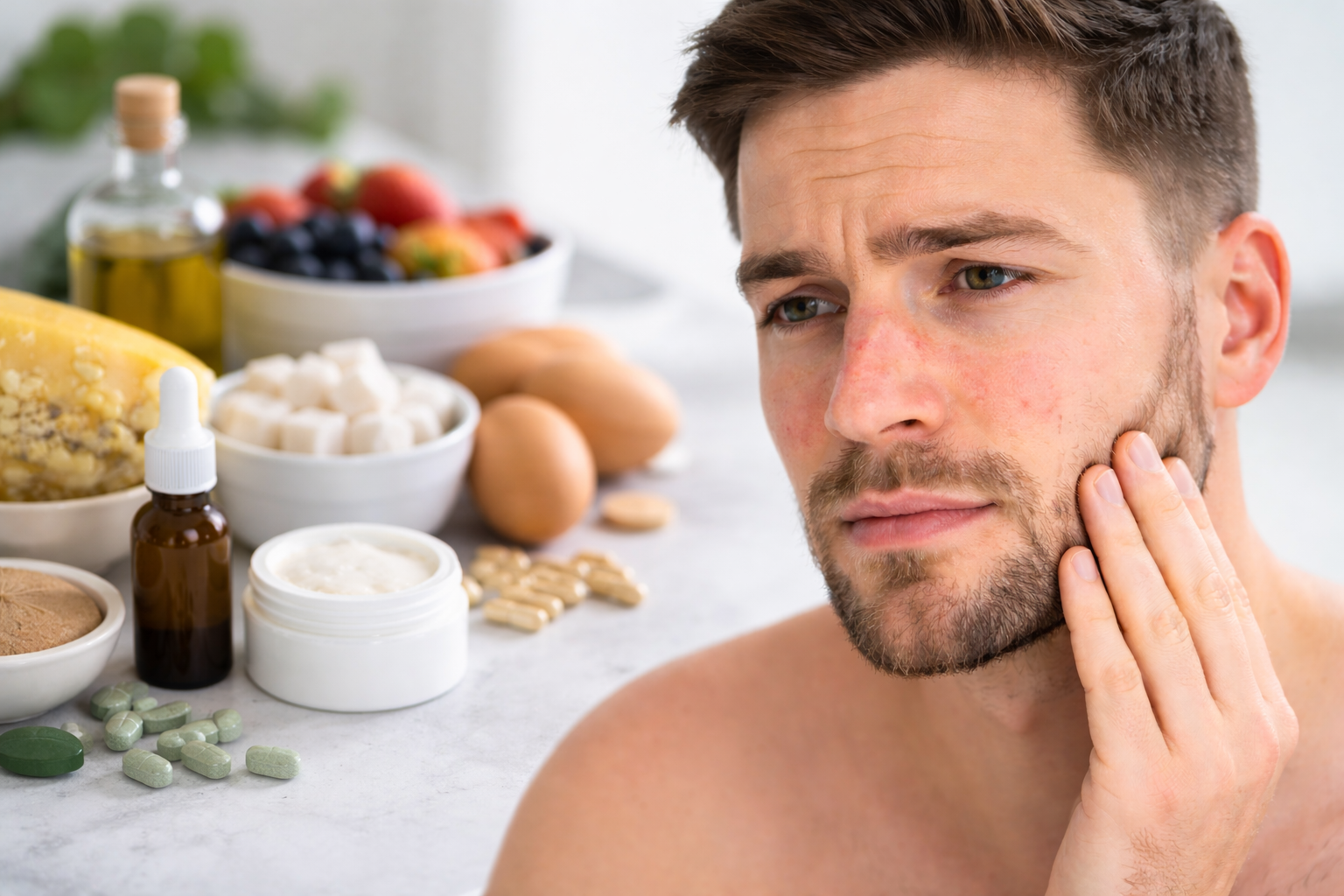
What Causes Seb Derm?
The Real Root Causes of Seborrhoeic Dermatitis (Not Just What You’ve Been Told)
If you’re dealing with seborrhoeic dermatitis—commonly known as seb derm or sebderm—you’ve probably asked:
“What actually causes this?”
You may have heard:
- “It’s yeast”
- “It’s oily skin”
- “It’s genetic”
But none of these explanations fully answer the question.
Because if seb derm were that simple, why does it suddenly appear, why does it flare up unpredictably, and why does it keep coming back—even after treatment?
To understand seb derm properly, we need to go deeper than surface-level explanations.
What Is Seb Derm (Really)?
Seborrhoeic dermatitis is typically described as a chronic inflammatory skin condition affecting oil-rich areas such as:
- Scalp
- Eyebrows
- Sides of the nose
- Beard area
- Chest
Symptoms include redness, flaking, greasy or dry patches, and itching.
Seb derm is not just a skin condition—it’s a symptom of internal imbalance.
The Common Explanation (And Why It’s Incomplete)
Most sources say seb derm is caused by Malassezia yeast, which lives naturally on the skin and feeds on oils.
This is partly true, but incomplete.
Everyone has Malassezia. Not everyone has seb derm.
So yeast alone cannot be the root cause.
The Real Causes of Seb Derm
Chronic Inflammation
At the centre of seb derm is inflammation. When your body is in a constant inflammatory state, skin becomes reactive and flare-ups become more likely.
Common drivers include:
- Poor diet
- Processed foods
- Refined sugars
- Alcohol
- Chronic stress
- Poor gut health
Immune System Overreaction
In people with seb derm, the immune system reacts more aggressively—even to normal skin microbes.
This explains why the same conditions affect some people but not others.
Altered Sebum (Skin Oil)
The composition of your skin oil matters. When internal health is off, sebum becomes more irritating and contributes to flare-ups.
Gut Health and the Skin Connection
Your gut plays a key role in skin health. When gut health is compromised, inflammation increases and the immune system becomes dysregulated.
Signs your gut may be involved include:
- Bloating
- Digestive discomfort
- Food sensitivities
- Irregular digestion
Diet and Food Triggers
Diet is one of the most powerful factors in seb derm.
Common triggers include:
- Sugar
- Refined carbohydrates
- Alcohol
- Dairy (for some people)
- Highly processed foods
These can increase inflammation, disrupt gut health, and affect skin oil composition.
Stress and Hormones
Stress affects hormones, immune function, and oil production. Many people experience flare-ups during stressful periods or poor sleep.
Skin Barrier Dysfunction
When the skin barrier is weakened, irritants penetrate more easily and inflammation increases.
This can be caused by:
- Harsh skincare products
- Over-cleansing
- Switching treatments too often
Why Seb Derm Feels So Unpredictable
Seb derm is influenced by multiple factors at once:
- Diet
- Stress
- Sleep
- Environment
- Hormones
This is why flare-ups can seem random.
Why Treatments Only Work Temporarily
Most treatments focus on symptoms:
- Antifungal shampoos
- Steroid creams
- Medicated lotions
They reduce symptoms temporarily but don’t address underlying causes such as inflammation and diet.
This is why seb derm keeps coming back.
The Missing Piece: Internal Environment
Your skin reflects your internal environment.
If that environment is inflamed or imbalanced, seb derm will persist.
A Different Way to Think About Seb Derm
Instead of asking:
“How do I treat seb derm?”
Ask:
“Why is my skin reacting in the first place?”
Reducing the Root Causes
To improve seb derm long-term, focus on:
- Reducing inflammation
- Improving diet
- Supporting gut health
- Simplifying skincare
- Managing stress
Why Simplification Works
Many people try to fix seb derm by adding more products or treatments.
But often, improvement comes from removing what is causing the problem.
The Role of Consistency
Seb derm does not change overnight. With consistent changes, skin can stabilise and flare-ups can reduce significantly.
What Causes Seb Derm Flare-Ups?
Flare-ups often occur when multiple triggers combine, such as:
- Poor diet and stress
- Lack of sleep and alcohol
- Skin irritation and inflammation
The Biggest Misunderstanding
The biggest misconception is that seb derm is just a surface-level fungal issue.
In reality, it is a deeper inflammatory condition influenced by internal factors.
Final Thoughts
Once you understand the real causes of seb derm, it becomes far more manageable.
By addressing inflammation, immune response, and internal health, you can move towards long-term skin stability.
If You’re Dealing With Seb Derm
You are not alone.
When you move beyond surface-level treatments and focus on root causes, real progress becomes possible.

0 Comments